Wednesday, 25 March 2015

2 main issues

ISSUES

As a young teenager living in London, Westfield in Stratford in my views doesn’t have any issues. The transport is great, there are shops everywhere, you are able to meet and see different kinds of people from different ethnic groups, and it is also a great social place. Whilst going on a shopping trip to Westfield, I thought to myself, and wondered about what the elderly thought about the major transition, which has occurred around the community. I therefore went and looked for an elderly residents which I could ask couple questions too.

After some phew hours I found An elderly women, and gently asked what issues do you think the whole transition in the area has brought?


TRAFFICK


Image result for traffic in stratford

She mentioned that the traffic density is high due to tourism and heavy goods vehicle, coming into the area.


LACK OF RESIDENTIAL SHOPS AND PRICING IN GROCERIES


Image result for corner shop in stratford


The need to help the elderly is needed perhaps by having more corner shops in residential areas. 

Prices up as numerous of tourist are willing to pay high prices, she argued.


Kevin Kludje

Nightlife In Stratford

The Goose 

Relating to this new perception of Stratford, along with apartment buildings, shops and the centres themselves, various new clubs and bars have been introduced to Stratford. Although most of these establishments contribute to a modernisation of the area, some pubs that have been there for several decades such as The Goose and The Goldengrove among more, have a reputation for fighting, drugs and in some cases prostitution that depict the older, generally accepted views of Stratford.

In massive contrast to the older pubs in the area and the night life scene in Stratford generally speaking, the gentrification of area becomes increasingly more apparent when looking into it. The introduction of Westfield saw many bars and cafes around the food court area and and combined with an Aspers casino on the top floor, certainly appeals to not only wealthier people who could afford to gamble but also people that very much ‘looked’ the part, again inviting those from much more middle class background as opposed to the typical working class that Stratford is often associated with.

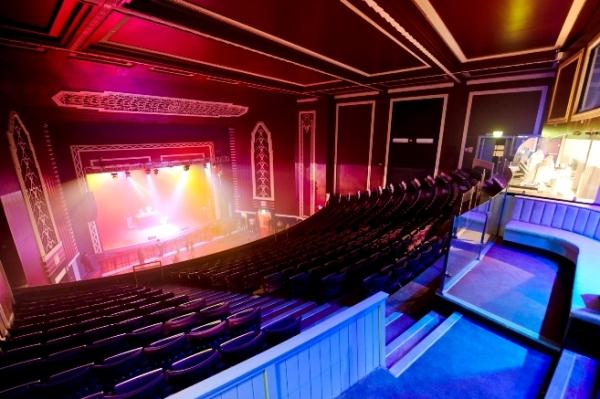
Despite new centres for activity being constructed in order to maintain this on-going redevelopment of the area, there have been massive refurbishments that also illustrate the attempts to attract middle class families to the area. The Sync building has had near £2 million pounds worth of refurbishments, a newly renovated car park and a main auditorium hall that can seat 2,500 people and has been tipped as "a beacon for night life in east London."  
SYNC building


Aspers Casino


James Dathorne. 

Postmodern Architecture


                                                   Postmodern Architecture


Post-modernism plays into the late 20th-century movement in architecture, arts and is a step away from modernism. Post-modernism include literature, history, economics and many more.

Many contemporary critics are interested in making sense of the time they live in.
One of the problems in dealing with post-modernism is in identifying it from modernism, In many ways post-modern architects and continue with experimentations that we can also find in modernist work. Post-modernism forms can be seen as an extension of modernism experimentation. Others prefer to move into post-modernism.

Speaking on Stratford while Stratford architecture has a lot of form within modernism there are a lot of post-modernism elements when it comes to the new projects within Stratford. Things are looking to move from modernism to post-modernism. For example Stratford ArcelorMittal Orbit comes into the post-modern age.

By Codeika Bent

Modernity in Stratford


                                                           Modernity In Stratford

We have seen a big change in Stratford from the early days to the present day today, not only has the city changed but also the people within the city. The Olympics Park as has brought a lot of change to the City especially because more tourist now come into London to shop mainly at the Westfield Shopping Centre. We have seen the transformation hands on from the Olympic Park Stadium, From the transition of just being London to a place were it has become a big deal for tourist and also Athletes.

Now modernity, through our change of culture has brought about a rational attitude towards the past and new open minded view toward the future. Everything within the modern era has been put into motion and transition towards the future. Modernity is a small part of a bigger picture within history and it is the era that has brought more fast change in human life. There seems to be a need for changing and speeding up the constant search for renewal. The transformations from buildings to cars to city's affects everything around us from our lifestyle to the way we choose to express ourselves.

While Modernity being about change within universal history it does create crisis and then theirs a need to solve those problems. Modernity creates problems along with its accomplishments, so can we really say that the transformation of Stratford is not only about it's 'image'. As we view Stratford now it seems as if Stratford is based on a image of it being perfect, where the buildings are so transformed and with saying that you get the sense that the people living in Stratford are as 'high end' as their buildings and surroundings.

By Codeika Bent

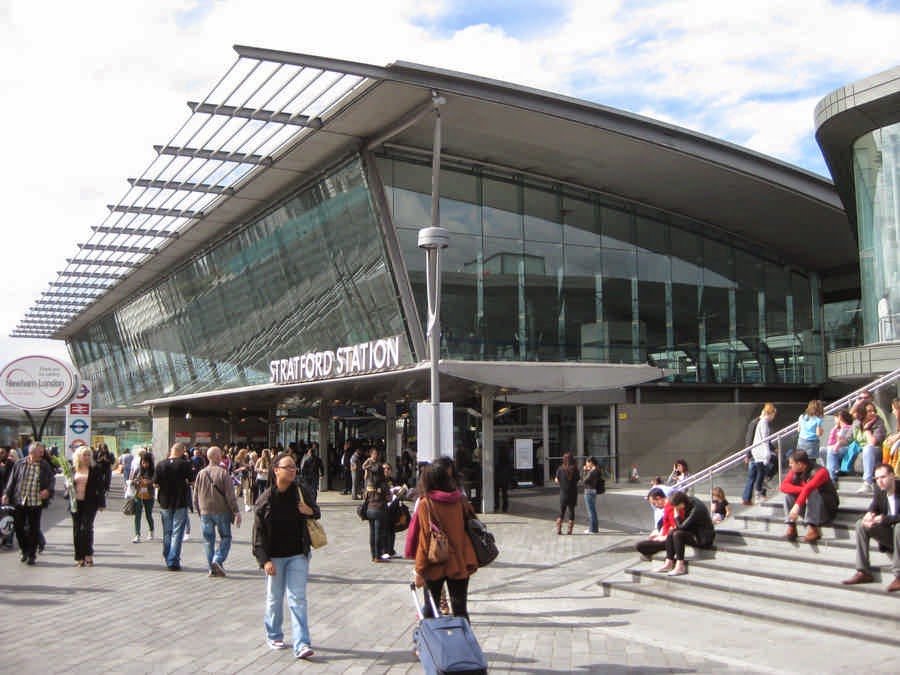
Stratford Station


                                                       Stratford Station

Stratford station is a large railway station in Stratford. Stratford station was a main point of arrival for the London 2012 Olympics and also the Paralympics. Theirs over 25 million passengers a year and that makes Stratford one of the top busiest station in London and also the UK. The station was first opened in 1839, The services increased in services and passengers and the it changed from slightly busy junction to one of Britain's major railway junction.
For the preparation for the Olympics and the Stratford City development a new exit and ticket hall was built. Passenger subways were extended to connect to the ticket hall. Which then formed part of the old station layout and that was then reopened so their can be interchange between [platform 3-12. New pedestrian bridge has also been built to connect Stratford shopping centre with the Stratford City development.

By Codeika Bent

Hiding Old Stratford

        There is no secret when talking about the developments of Stratford in the last 30, 40 years. Stratford has constantly been subjected to new and innovative projects. Although this has completely changed its image, from a relatively poor part of London, to one of the most emblematic areas, reminiscence of an old and underprivileged Stratford are still capturing the eyes of the public.
So called ‘’ugly’’ structures, built in the 70s and 80s, proved to be problematic after the completion of Westfield shopping centre and the Olympic Park, stealing the glimmering new look of Stratford, and ruining the modern image of a fresh Stratford.

The solution for this: a massive titanium sculpture meant the hide the once considered modern shopping centre and buildings of Stratford, entitled ‘’The Stratford Shoal’’.


‘’The Stratford Shoal’’ consists of a series of curved, branch-like steel trees that support a series of giant titanium leaves designed to display shades of green and yellow.
This sculpture is a public realm intervention, aiming to mask the old and outdated structures of the 1970s, and to reassure the residents that they live in a much desired modern area.

These type of intervention are a good example of how ideology changed in the last 40 years. What was considered new and fashionable has now become aged and old-fashioned.
        Conflicting structures from different architectural styles, old and modern, classic and futuristic, are ever present in big cities, as to remind us how much our views have changed. It is almost an accepted concept, that the image of a big city must consist of a clash between the old and the new, striving for fresh projects that also shift the attention from old and archaic elements still present in the city.


by Sebastian Nita

Developments in Stratford

        From a relatively small agrarian settlement to an essential industrial centre, to a much needed commercial and cultural centre in East London, Stratford underwent massive changes throughout the passing of time. 
The most noticeable of these changes were the construction of one of the largest urban shopping centres in Europe, Westfield Shopping Centre (opened in 2011) and the Queen Elizabeth II Olympic Park.
No one expected for Stratford’s image to change so much in such a short period of time, and now, with the accomplishment of these two iconic projects, is there anything left for future investment or future developments of East London’s most emblematic centre? The answer to that question is: most definitely.
As it turns out, Stratford is attracting new investors that are willing to pump money into it and to keep reshaping it’s image until Stratford might become a new and certainly more expensive district not just of East London, but London itself.

In 2012 the London Legacy Development Corporation designated Taylor Wimpey and L&Q to start the construction of the first new neighbourhood in Chobham Manor - on the Olympic Park. This is just one of the five new neighbourhoods, with a total of 870 homes, that will be built in Stratford, reviving the area in the eyes of traditional families that look for a quiet place to live in. 


        What makes Stratford so attractive to new investors, other than the massive Westfield which attracts thousands of people, is also its good transport links. commuters can be in central London in approximately 15 minutes and with the new project to directly link Stratford to Heathrow via Crossrail, investors will definitely have no hesitation to keep throwing money on the once small agrarian settlement.
Although these might seem some ambitious projects for East London, the Manhattan Loft Gardens project will cast away any doubts that anyone might have about Stratford not being one of the top areas of London.


        The projects consists of a 42 storey tall building, covered in glass and terracotta, that will include 248 apartments and an array of gardens incorporated at different levels of the building, and just as an added bonus, the building will overlook the Olympic Stadium. 
After its completion in 2016, the Manhattan Loft Gardens will be the tallest and most expensive building in East London, with the price range being as much £565.000 for a one-bedroom flat.

These are just some of the many projects that are taking place in Stratford, projects that will most likely put Stratford well on its way to becoming one of the most expensive areas of London.

What is interesting about these projects, is the changes they create in social class. As Stratford was originally a working class area, these new investments are changing its historical image and are subjecting it to a process of gentrification. What was once an area known for its open markets, traditional products and historical landmarks, is surely becoming a luxurious shopping centre, truistic attraction and upper class residence.
A loss of historical and cultural identity is also a repercussion of the new investments in Stratford, as people are eager to applaud the new shinny buildings and expensive shops, tossing aside any historical or cultural significance that old Stratford might have to offer.

Yet this is not a process happening just in Stratford, but in every big city of the world, turning them into modern metropolis with bigger shopping centres, taller buildings and faster transportation.


by Sebastian Nita